
From April 2026, several important UK employment law changes come into force: impacting pay, compliance, and how businesses manage their workforce.
For employers, staying up to date isn’t just good practice- it’s essential to avoid penalties, protect your reputation, and support your people effectively.
In this guide, we break down the key April 2026 employment law changes, including National Minimum Wage increases, changes in the Employment Rights Act, what you need to do, and why these changes matter.
📊Key Employment Law Changes: April 2026
1. National Minimum Wage & National Living Wage Increases
From 1 April 2026, the UK government has confirmed the following new minimum wage rates:
New hourly rates (from April 2026)
- £12.71 – National Living Wage (age 21 and over)
- £10.85 – Ages 18–20
- £8.00 – Ages 16–17
- £8.00 – Apprentice rate
- £11.10 per day – Accommodation offset
These increases represent a rise across all age groups, with the largest percentage increase for younger workers.
👉 The new rates must be applied from the first pay period on or after 1 April 2026. You cannot delay implementation to suit payroll cycles.
What This Means for Employers
- The National Living Wage rises by 50p (from £12.21 to £12.71)
- The 18–20 rate rises by 85p
- The under 18 and apprentice rates rise by 45p
👉 For a full-time employee (37.5 hours), this equates to a minimum annual salary of around £24,784.50 for those aged 21+, increasing payroll costs significantly.
⚠️ Important Reminder
The National Minimum Wage is a legal requirement, not guidance.
Failure to comply can result in:
- Fines of up to 200% of underpaid wages
- Public naming by HMRC
- Reputational damage
2. Big changes to the Employment Rights Act
April 6th 2026 brings significant changes to UK employment law, with updates set to strengthen employee rights and increase employer responsibilities.
Laws enforced from 6th April:
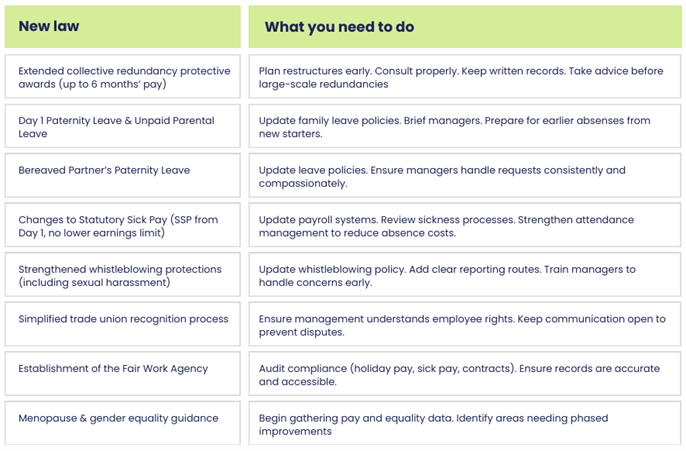
Why These Changes Matter
Non-compliance with UK employment law can result in:
- Financial penalties
- Tribunal claims
- Reputational damage
- Reduced employee trust
👉 Proactively updating your HR practices protects your business and supports your workforce.
Final Thoughts
The April 2026 employment law changes represent a major shift towards stronger employee protections and increased accountability for employers.
By reviewing your policies, updating your processes, and preparing your managers, you can stay compliant and confidently navigate these changes.
📩 Need Support?
If you’re unsure whether your business is ready and need some last-minute support, we can help.
👉 Get in touch for a no-obligation HR review and ensure your policies, processes, and payroll are fully compliant.
👉 Contact us at hrhelp@hrpartner.co.uk
👉 Click here for our Employment Law Changes Factsheet for an overview of the changes coming later in 2026 and 2027.
Lisa & the HR Partner Team